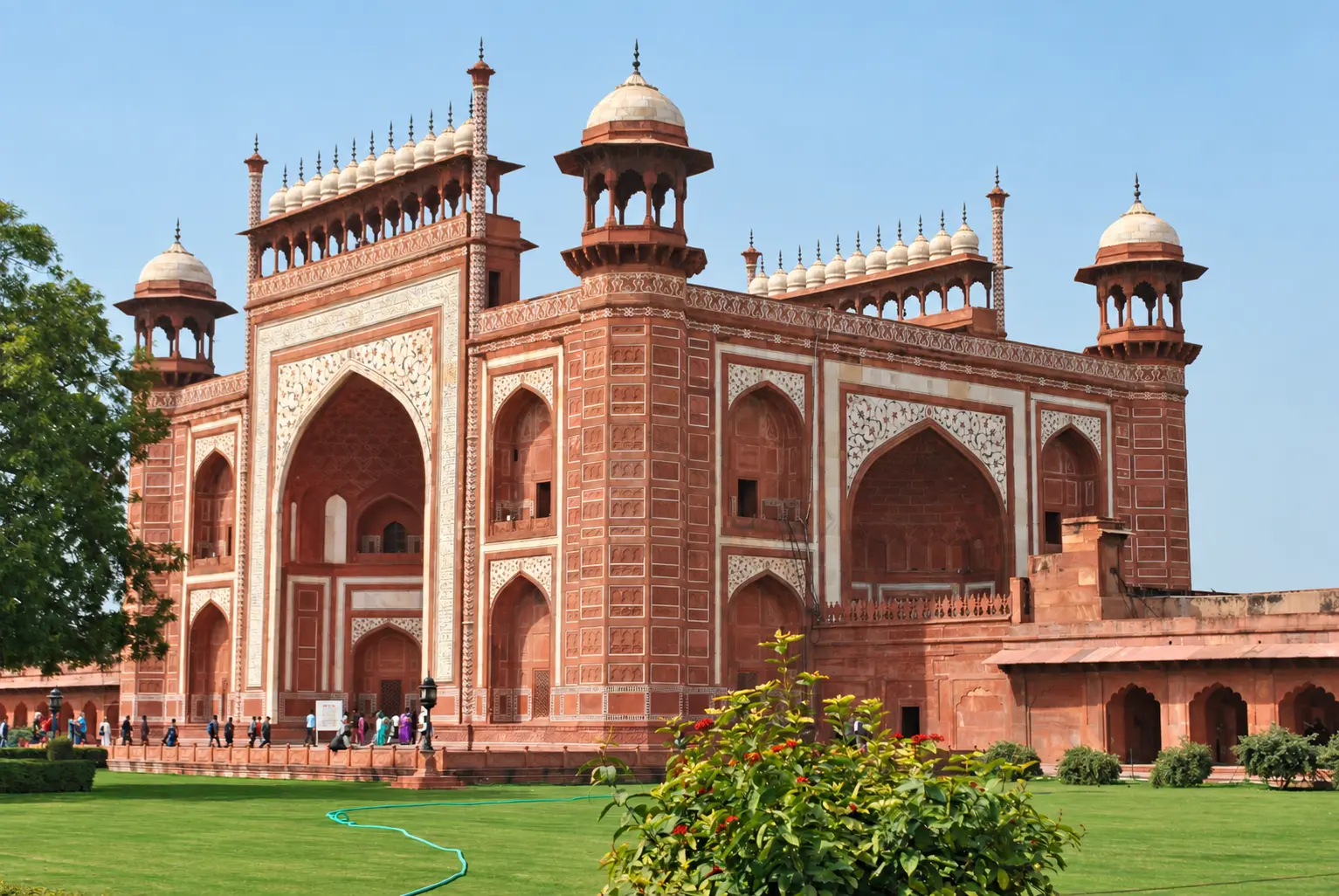
Two countries, one memorable journey—historic cities, wildlife, tea country and southern coastal beauty.
Tour overview
Combine India’s Golden Triangle and Ranthambore wildlife experiences with Sri Lanka’s cultural cities, sacred sites, tea country and southern coast. The journey blends distinctive landmarks and varied scenery across two countries, with planned travel and rest days.
Route at a glance
Delhi → Agra → Ranthambore → Jaipur → Colombo → Dambulla → Kandy → Nuwara Eliya → Ella → Kosgoda → Galle
Day-by-day itinerary
Day 1: Arrival in Delhi
Route: Fly to Delhi
Meals: Breakfast & Dinner
Depart on your international flight to Delhi for the beginning of your journey. Upon arrival at Indira Gandhi International Airport, you will be welcomed by our local representative in the Arrivals Hall and assisted with your transfer to the hotel.
The transfer to central Delhi takes approximately 45 minutes, depending on traffic conditions. On arrival, complete your check-in and enjoy the remainder of the day at leisure, providing time to rest after your international journey.
Early check-in is not included and remains subject to the hotel's standard check-in time. Additional pre- or post-tour nights can be arranged on request.
About the places you’ll visit
Delhi – Delhi has served as a centre of political and cultural life for centuries, with layers of Sultanate, Mughal and modern Indian history. Its heritage ranges from Old Delhi’s bazaars and religious architecture to the grand avenues and monuments of New Delhi.
Day 2: Delhi
Route: Delhi
Meals: Breakfast & Dinner
After breakfast, meet your guide before beginning a full-day exploration of Old and New Delhi. Today’s programme combines historic neighbourhoods, religious architecture and several of the capital’s best-known monuments.
Travel to Old Delhi to experience Khari Baoli, one of the city’s famous wholesale spice markets. Enjoy a rickshaw ride through the busy lanes before visiting Jama Masjid. Continue to New Delhi for a photo stop at India Gate, then finish at Qutub Minar.
The programme includes walking and standing, with approximately 3 to 3.5 hours of sightseeing on foot.
About the places you’ll visit
Jama Masjid – Commissioned by Mughal Emperor Shah Jahan and completed in the 17th century, Jama Masjid is one of India’s largest and most significant mosques. Built in red sandstone and white marble, it is distinguished by its monumental gateways, elegant domes and expansive courtyard, which remain defining features of Old Delhi .
India Gate – Designed by Sir Edwin Lutyens and completed in 1931, India Gate is a prominent war memorial commemorating Indian soldiers who died during the First World War and the Third Anglo-Afghan War. Set along one of New Delhi ’s grand ceremonial avenues, it remains one of the capital’s most recognisable landmarks.
Qutub Minar – Rising approximately 72.5 metres, Qutub Minar is the centrepiece of the UNESCO World Heritage-listed Qutb complex. Construction began towards the end of the 12th century under Qutb-ud-din Aibak and continued under later rulers, resulting in one of Delhi ’s most distinctive medieval monuments.
Khari Baoli – A centuries-old trading district in Old Delhi, renowned for its concentrated spice and dry-fruit wholesale markets, colourful merchandise and energetic narrow streets.
Day 3: Delhi to Agra
Route: Delhi – Agra
Meals: Breakfast & Dinner
After breakfast, check out and depart Delhi for Agra by private air-conditioned vehicle. The journey takes approximately 4 hours, subject to traffic and road conditions.
After arrival and hotel check-in, visit the magnificent Agra Fort. Allow approximately 1.5 hours to explore the complex on foot. The visit includes some stairs and uneven surfaces.
This evening, enjoy Mohabbat the Taj, a theatrical production inspired by the love story of Emperor Shah Jahan and Mumtaz Mahal. Music, dance, costumes and stage effects bring the story associated with the Taj Mahal to life.
About the places you’ll visit
Agra Fort – Agra Fort , a UNESCO World Heritage Site, was substantially rebuilt in red sandstone by Emperor Akbar from 1565 onwards. Later Mughal rulers, particularly Shah Jahan, added elegant marble palaces, audience halls and courtyards, creating the striking blend of military strength and refined architecture seen today.
Mohabbat the Taj – This live theatrical production presents a dramatic interpretation of Shah Jahan's devotion to Mumtaz Mahal and the story associated with the creation of the Taj Mahal .
Agra – Set beside the Yamuna River, Agra rose to prominence under the Mughal emperors. Its architectural heritage includes the Taj Mahal and Agra Fort, as well as long-standing marble-inlay and craft traditions.
Day 4: Agra to Ranthambore
Route: Agra – Ranthambore
Meals: Breakfast & Dinner
Begin the morning with a visit to the Taj Mahal. Travel to the monument's entrance area using the designated electric shuttle and allow approximately 90 to 120 minutes to explore the complex with your guide.
Protective shoe covers are required for entry to the main mausoleum area and are normally provided as part of visitor arrangements. Reaching the mausoleum involves approximately 22 steps, with additional smaller steps around gateways and pathways.
After the visit, commence the long road journey to Ranthambore National Park. The drive takes approximately 7 to 8 hours depending on traffic and road conditions, with comfort stops made as appropriate. On arrival, check into your hotel for a two-night stay.
About the places you’ll visit
Taj Mahal – Commissioned by Mughal Emperor Shah Jahan in memory of Mumtaz Mahal, the white-marble mausoleum stands beside the Yamuna River. Construction of the principal mausoleum began in 1632 and was substantially completed in 1648, with work on the wider complex continuing afterwards. Its symmetry, calligraphy, floral carving and pietra dura inlay are hallmarks of Mughal craftsmanship.
Ranthambore National Park – Ranthambore National Park is known for its dry forests, lakes, rocky ridges and historic ruins. The reserve is important to tiger conservation, although wildlife sightings depend on natural conditions and cannot be guaranteed.
Day 5: Ranthambore National Park
Route: Ranthambore National Park
Meals: Breakfast & Dinner
Today is devoted to the wilderness of Ranthambore National Park. Begin with an early-morning safari, generally involving approximately 2 to 3 hours of driving through the reserve.
Return to the hotel for time to rest before heading back into the park for an afternoon safari. Exploring at different times of day provides another opportunity to observe the landscapes and wildlife of the reserve.
Ranthambore is famous for Bengal tigers, but wildlife is unpredictable and sightings of any particular species cannot be guaranteed. Other animals found in the wider reserve include sambar and spotted deer, nilgai, wild boar, langurs, leopards, sloth bears and a wide variety of birds.
Day 6: Ranthambore to Jaipur
Route: Ranthambore – Jaipur
Meals: Breakfast & Dinner
After breakfast, check out and depart Ranthambore for Jaipur. The drive takes approximately 4 to 4.5 hours, depending on traffic and road conditions.
Upon arrival in Jaipur, check into your hotel. Later, enjoy a traditional Rajasthani turban-tying experience at the hotel, an enjoyable introduction to the colourful dress traditions of the region.
The remainder of the day is at leisure, allowing time to relax before the following day's sightseeing.
About the places you’ll visit
Jaipur – Founded in 1727 by Maharaja Sawai Jai Singh II, Jaipur is celebrated for its planned historic centre, distinctive pink-toned buildings, royal palaces and Jantar Mantar astronomical observatory.
Day 7: Jaipur
Route: Jaipur
Meals: Breakfast & Dinner
After breakfast, begin a full-day guided exploration of Jaipur. Start with an exterior photo stop at Hawa Mahal, the famous Palace of the Winds, before continuing to Amber Fort.
Travel by jeep from the designated parking area to the fort entrance. Allow approximately 1.5 to 2 hours to explore the palace complex on foot. There are a number of steps and uneven surfaces within the fort.
Return to central Jaipur to visit the Maharaja's City Palace and the nearby Jantar Mantar Observatory. Later, visit a traditional workshop to observe crafts such as hand block printing and carpet weaving.
About the places you’ll visit
Hawa Mahal – Built in 1799 during the reign of Maharaja Sawai Pratap Singh, Hawa Mahal is celebrated for its multi-story façade of screened windows and openings, historically allowing women of the royal household to observe street life while remaining screened from public view.
Amber Fort – The principal palace complex at Amber was developed from the late 16th century under Raja Man Singh I and expanded by later rulers. Its courtyards, gateways, royal apartments and celebrated Sheesh Mahal combine Rajput and Mughal influences.
City Palace & Jantar Mantar – Located in the heart of Jaipur ’s historic centre, the City Palace is an impressive royal complex of courtyards, gateways and ornate palace buildings. Its museums display collections that illuminate Jaipur ’s royal heritage, while parts of the palace remain associated with the former ruling family. Nearby stands Jantar Mantar , created under Maharaja Sawai Jai Singh II and recognised as a UNESCO World Heritage Site for its monumental instruments, built for astronomical observation, timekeeping and calculation.
Day 8: Jaipur to Colombo
Route: Jaipur – Colombo
Meals: Breakfast & Dinner
This is a travel day between countries. Transfer for your confirmed flight arrangements from Jaipur to Colombo, following the routing and schedules issued with your booking.
On arrival in Sri Lanka, meet the local representative and transfer to the Colombo hotel, with time to settle in after the journey.
About the places you’ll visit
Colombo – Colombo is Sri Lanka’s commercial capital, where colonial-era architecture, religious landmarks and lively modern neighbourhoods reflect the island’s maritime trading history.
Day 9: Colombo to Pinnawala and Dambulla
Route: Colombo – Pinnawala and Dambulla
Meals: Breakfast & Dinner
Travel from Colombo towards Dambulla, stopping at Pinnawala Elephant Orphanage as specified in the itinerary.
Continue to the Dambulla Cave Temple, an important Buddhist heritage site with historic painted interiors and shrine spaces.
The temple approach includes an uphill walk and many steps; footwear requirements apply.
About the places you’ll visit
Pinnawala Elephant Orphanage – Established in 1975 near the Maha Oya River, Pinnawala was created to care for orphaned and other elephants requiring assistance. Visitor experiences and daily routines depend on operational arrangements at the facility.
Dambulla Cave Temple – Also known as the Golden Temple of Dambulla , this UNESCO World Heritage Site has a religious history extending for more than two millennia. The cave complex contains more than 150 statues and images together with extensive Buddhist wall and ceiling paintings.
Day 10: Sigiriya and Polonnaruwa
Route: Sigiriya and Polonnaruwa
Meals: Breakfast & Dinner
Explore Sigiriya Rock Fortress and the ancient city of Polonnaruwa. Sigiriya’s archaeological gardens and lower complex can be explored without undertaking the full steep climb to the summit.
At Polonnaruwa, discover the remains of an ancient royal capital through its historic structures and carved stone heritage.
About the places you’ll visit
Sigiriya Rock Fortress – Rising roughly 200 metres above the surrounding landscape, Sigiriya is closely associated with King Kashyapa I in the 5th century CE. Its gardens, hydraulic features, frescoes and monumental lion gateway demonstrate sophisticated ancient planning and engineering.
Polonnaruwa Ancient City – Polonnaruwa flourished as a major royal capital from the 11th to 13th centuries. Its archaeological landscape preserves palaces, Buddhist monuments, monasteries, temples and sophisticated irrigation work, including the celebrated Gal Vihara sculptures.
Day 11: Dambulla to Kandy
Route: Dambulla – Kandy
Meals: Breakfast & Dinner
Travel from Dambulla towards Kandy, including a visit to a traditional spice garden along the way.
In Kandy, visit the Temple of the Sacred Tooth Relic, where respectful dress and local observances are important.
The day concludes with the scheduled Kandy Cultural Show, subject to confirmed programme arrangements.
About the places you’ll visit
Spice Garden – Sri Lanka’s spices have played an important role in the island’s culinary traditions and international trade. A guided garden visit introduces the cultivation and preparation of selected tropical spices and herbs.
Temple of the Sacred Tooth Relic – Known as Sri Dalada Maligawa, this sacred Buddhist temple is traditionally believed to house a tooth relic of the Buddha. The temple forms part of the UNESCO-listed Sacred City of Kandy and remains an active place of worship.
Kandy Cultural Show – Traditional dance and drumming are important expressions of Sri Lanka’s cultural heritage. Programmes vary by venue but commonly include Kandyan dance, percussion, ceremonial costumes and energetic performance traditions.
Day 12: Kandy
Route: Kandy
Meals: Breakfast & Dinner
Explore Kandy’s Royal Botanic Gardens, where planted avenues and collections create a pleasant setting for a guided walk.
Continue to the lake and central town area, with time to observe local markets and handicraft outlets.
The guide can explain the walking requirements and allow comfortable pacing.
About the places you’ll visit
Kandy – Kandy was the last capital of Sri Lanka’s independent Sinhalese kingdom and remains an important cultural and religious centre, particularly for the Temple of the Sacred Tooth Relic.
Day 13: Kandy to Nuwara Eliya
Route: Kandy – Nuwara Eliya
Meals: Breakfast & Dinner
Leave Kandy for the central highlands, enjoying views of tea country and the changing mountain scenery.
Stop at Ramboda Falls and visit a tea factory and plantation to learn about tea production.
Continue to Nuwara Eliya and enjoy an introduction to the hill-country town.
About the places you’ll visit
Sri Lanka’s Tea Country – Commercial tea cultivation expanded during the 19th century and became a defining feature of the central highlands. Elevation, rainfall and cooler temperatures contribute to the character of tea grown around Nuwara Eliya .
Ramboda Falls – Set among the lush highlands of the Central Province, Ramboda Falls provides a scenic stop amid steep slopes, streams, tea country and tropical vegetation.
Day 14: Nuwara Eliya
Route: Nuwara Eliya
Meals: Breakfast & Dinner
Enjoy a gentler day exploring the scenery around Nuwara Eliya.
Spend time at Gregory Lake and travel by tuk-tuk towards viewpoints around Shantipura, weather and road access permitting.
The mountain climate can change quickly, so the order of activities may be adjusted for comfort.
About the places you’ll visit
Gregory Lake – Photo Stop – On the return journey to the hotel from Seetha Amman Temple, make a short photo stop at Gregory Lake . Created during the British colonial period and associated with Governor Sir William Gregory in the 1870s, the lake is one of Nuwara Eliya ’s best-known landscapes. This will be a brief stop for photographs rather than an extended recreational visit.
Nuwara Eliya – High in Sri Lanka’s central hills, Nuwara Eliya is known for its cool climate, tea plantations and historic buildings associated with the colonial-era hill station.
Day 15: Nuwara Eliya to Ella
Route: Nuwara Eliya – Ella
Meals: Breakfast & Dinner
Continue through Sri Lanka’s central highlands towards Ella, surrounded by scenic hills and tea landscapes.
Visit viewpoints around Nine Arch Bridge and see Ravana Falls as planned. Viewpoint access may involve short walks on uneven or sloping ground; local arrangements will be confirmed by your guide.
About the places you’ll visit
Nine Arch Bridge – Also known as the Bridge in the Sky, this early 20th-century railway viaduct between Ella and Demodara is distinguished by its nine arches and scenic setting among greenery and tea-covered slopes. It is a popular viewpoint for photographs, although train crossings are not guaranteed. Guests should use designated paths and avoid walking on active railway tracks.
Ravana Falls – One of the best-known waterfalls near Ella , Ravana Falls descends through a lush rocky landscape surrounded by tropical vegetation and dramatic highland scenery. The waterfall is associated in local tradition with King Ravana and stories from the Ramayana, adding cultural interest to its natural appeal. Guests can enjoy views from the designated roadside viewing area and take photographs, subject to weather and local conditions. Water levels, access and visibility may vary, and guests should avoid climbing wet rocks, entering the water or approaching restricted areas.
Ella – Ella is a highland town set among green valleys, tea country and dramatic viewpoints, and is known for the scenic railway landscape around Nine Arch Bridge.
Day 16: Ella leisure day
Route: Ella leisure day
Meals: Breakfast & Dinner
Enjoy a slower day at leisure in Ella, giving you the opportunity to rest at the hotel or explore independently at your own pace.
The evening includes dinner in the local area according to the confirmed programme. Optional independent activities are not part of the guided sightseeing unless specifically agreed.
Day 17: Ella to Badulla and Kosgoda
Route: Ella – Badulla and Kosgoda
Meals: Breakfast & Dinner
Travel by train along the scenic route from Ella to Badulla, subject to confirmed railway operations and seating. Afterwards continue by coach to Kosgoda on the southern coast.
This is a substantial travel day: allow most of the day for the combined rail and road journey, with the final timing dependent on transport arrangements.
About the places you’ll visit
Ella to Badulla Train Journey – Sri Lanka’s hill-country railway developed during the British colonial period and became closely linked with the transport needs of the plantation economy. The Ella-Badulla section provides a scenic perspective on mountain landscapes.
Kosgoda & Bentota Region – Sri Lanka’s southwestern coast is known for tropical vegetation, sandy shoreline and a more relaxed seaside atmosphere, providing a contrast to the ancient cities and highlands experienced earlier in the journey.
Day 18: Stilt fishing and Galle
Route: Stilt fishing and Galle
Meals: Breakfast & Dinner
Visit the southern coastline to observe traditional stilt fishing before continuing to the historic fortified town of Galle. Walk through Galle Fort’s atmospheric streets, defensive walls and ocean-facing ramparts, hearing about the port’s trading history.
Expect walking on old paved surfaces and exposed coastal sections.
About the places you’ll visit
Traditional Stilt Fishing – Fishermen traditionally balance on simple wooden supports fixed into shallow coastal waters while using fishing lines or rods. Today the practice is less widespread as an everyday livelihood, and some demonstrations encountered by visitors may be partly tourism-oriented.
Galle Fort – The Portuguese established early fortifications at Galle in the 16th century. After taking the settlement in 1640, the Dutch substantially expanded and strengthened the fort with defensive walls, bastions, gateways and other colonial-era structures. The historic fortified town is now a UNESCO World Heritage Site and remains one of Sri Lanka’s most distinctive cultural landmarks. Today, visitors can explore its atmospheric streets, historic buildings, churches, museums, cafés and small shops while enjoying views across the Indian Ocean.
Galle – Galle is a historic port whose fortified old town reflects centuries of Indian Ocean trade and successive Portuguese and Dutch colonial influences.
Day 19: Madu River and turtle hatchery
Route: Madu River and turtle hatchery
Meals: Breakfast & Dinner
Enjoy a boat safari on the Madu River among wetland channels, mangroves and islands, with chances to observe birdlife in a natural environment. Later, visit a turtle hatchery or conservation centre to learn about local marine conservation. Sightings, hatching and turtle releases depend on natural conditions and cannot be promised.
About the places you’ll visit
Madu River Boat Safari – The Madu River area is characterized by mangrove-lined channels, islands and wetland habitats that support a variety of birdlife and aquatic species. The river and its surrounding waterways offer a peaceful setting for observing the region’s natural environment and traditional coastal lifestyle. Some communities in the wider area are associated with cinnamon cultivation, religious sites and small-scale traditional activities, providing insight into local livelihoods and the importance of the wetlands.
Turtle Hatchery & Conservation Centre – Sri Lanka’s southern coastline provides important nesting habitat for several sea turtle species. Conservation centres may protect eggs and hatchlings, care for injured or vulnerable turtles and support public education about marine conservation. A visit can provide an introduction to the challenges faced by sea turtles, including habitat disturbance, fishing activity and plastic pollution. Operations and animal-care practices vary between centres, and guests are encouraged to follow local guidance and observe the turtles respectfully.
Day 20: Departure
Route: Departure
Meals: Breakfast & Dinner
At the appropriate time, check out and transfer from Kosgoda to Bandaranaike International Airport for the confirmed departure flight.
Allow sufficient travel time for road conditions and airline check-in requirements.
The final departure arrangements, and any farewell meal included in the confirmed programme, will be advised with your travel documents.
About the places you’ll visit
Kosgoda – Kosgoda is a coastal area associated with sandy beaches, marine turtle conservation initiatives and access to the waterways and wetlands of southern Sri Lanka.
Inclusions
- International economy flights from Australia to India, onward from Jaipur to Colombo, and from Colombo to Australia, including applicable taxes and current fuel surcharges, unless a land-only option is selected. Airline, routing, baggage allowance, flight timings and ticket conditions will be advised with the confirmed booking documentation and remain subject to airline schedules and conditions.
- 19 nights’ 5-star hotel accommodation based on twin/double sharing.
- Daily breakfast and dinner throughout the tour, subject to flight schedules and operational arrangements.
- Airport meet-and-assist services, arrivals, departures, sightseeing transfers and transportation by private air-conditioned vehicle, as included in the itinerary.
- All sightseeing, monuments and entrance fees specifically listed in the confirmed itinerary.
- Cycle-rickshaw ride through Old Delhi.
- Mohabbat the Taj theatrical performance in Agra.
- Two scheduled Ranthambore safaris, subject to park operations, permits and local authority arrangements.
- Traditional Rajasthani turban-tying experience in Jaipur.
- Jeep transfer to Amber Fort.
- Pinnawala Elephant Orphanage.
- Sigiriya Rock Fortress and Polonnaruwa Ancient City.
- Kandy Cultural Show.
- Tea plantation and factory visit.
- Scenic train journey from Ella to Badulla, subject to seat availability and railway operations.
- Tuk-tuk ride in Nuwara Eliya to the Shantipura viewpoints.
- Tuk-tuk transfer in Ella for the visit to Nine Arch Bridge.
- Traditional stilt-fishing experience.
- Madu River boat safari.
- Turtle hatchery or conservation-centre visit.
- Farewell dinner in Colombo on the departure day, subject to the confirmed flight schedule.
- English-speaking local guides, national escort and specialist assistance as described in the tour programme.
- Two bottles of drinking water per person per day, provided in the touring vehicle.
Exclusions
- Travel insurance.
- Visa fees and entry permissions.
- Passport-related expenses.
- Camera or video fees charged separately at attractions.
- Lunches, beverages and meals not specifically included.
- Tips and gratuities for guides, drivers, hotel staff and other service providers.
- Personal expenses, including shopping, telephone calls, laundry, minibar, room service and incidental purchases.
- Single-room supplements, room upgrades, early check-in and late check-out unless specifically confirmed.
- Excess baggage, preferred airline seating and other airline ancillary charges beyond the confirmed ticket allowance.
- Optional tours, additional sightseeing and activities not specifically listed in the confirmed itinerary.
- Additional transportation or services not specifically listed under Services Included.
- Any service or item not specifically mentioned in the confirmed itinerary or final quotation.
- Additional expenses arising from delays, cancellations, weather events or other disruptions, subject to the booking terms and applicable law.
Important travel information
- Driving distances and transfer times are approximate and may vary with traffic, road conditions, weather, stops and local circumstances.
- Hotel check-in and check-out times follow the individual hotel’s policies. Early check-in and late check-out are available only when specifically confirmed.
- Flight and rail schedules, seats, attraction opening days and access may change. The confirmed travel documents and itinerary will set out final arrangements.
- Historic sites and natural attractions may involve walking, uneven ground, steps, slopes and periods of standing. Comfortable, supportive footwear is recommended.
- At temples and other places of worship, dress modestly, remove footwear when asked and respect local customs and photography restrictions.
- Outdoor activities may be affected by rain, heat, mist or other conditions. Guides may adjust the order of sightseeing where necessary.
- Optional activities, purchases and services are included only if specified in your confirmed itinerary or quotation.
- Where itinerary changes become necessary for operational reasons, Kora Trails will arrange practical alternatives while seeking to preserve the character of the journey.
- In India, the Taj Mahal is normally closed to general visitors on Fridays; other monument and museum opening days should be reconfirmed.
- At Ranthambore, safari zones, vehicle arrangements and timings are controlled by park authorities. Tiger or other wildlife sightings cannot be guaranteed.
- In Sri Lanka, the climb to Sigiriya Rock Fortress includes numerous steep and uneven steps; reaching the summit is optional and visitors may enjoy the lower gardens instead.
- The Ella–Badulla train journey is subject to railway operations, confirmed schedules and seat availability. Wildlife encounters and turtle sightings cannot be guaranteed.
Sigiriya: what to expect
The full ascent of Sigiriya Rock Fortress involves approximately 1,200 steps and is one of the more physically demanding activities on this itinerary. The route includes uneven stone steps, steep staircases, narrow sections and exposed metal stairs, with heat and humidity adding to the effort. The complete climb may take approximately 1½ to 2 hours, depending on individual pace and visitor numbers.
Guests with heart or respiratory conditions, significant knee, hip or back problems, mobility or balance difficulties, vertigo, or other medical concerns should seek medical advice before attempting the climb. Guests are encouraged to proceed only at a pace that is comfortable for them and may stop at any stage.
Reaching the summit is completely optional. Guests who prefer not to make the full climb can explore the lower archaeological complex and gardens and enjoy views of Sigiriya Rock from ground level. Please advise your Kora Trails guide if you have any concerns before beginning the visit.
Before you travel
Before booking your India and Sri Lanka journey, please tell Kora Trails about any mobility, health, dietary or accessibility requirements so that we can discuss the suitability of planned visits, vehicle transfers, walking and steps. Please follow your healthcare professional’s advice about travel or physically demanding activities.
Travellers are responsible for ensuring their passports, required entry permissions, travel insurance and other travel documentation meet the relevant requirements before departure. Kora Trails can provide general guidance, but entry decisions and documentation remain the traveller’s responsibility. For this two-country journey, check passport validity and entry requirements separately for India and Sri Lanka, including arrangements for the international connection.
Your final quotation and confirmed itinerary will specify the hotels, flights or trains where applicable, meals, admission fees, transfers and other included services. Please read our Terms & Conditions before booking.